
On Denim
How many pairs of jeans does a man need? The definitive answer is three—well, four, but who's counting?

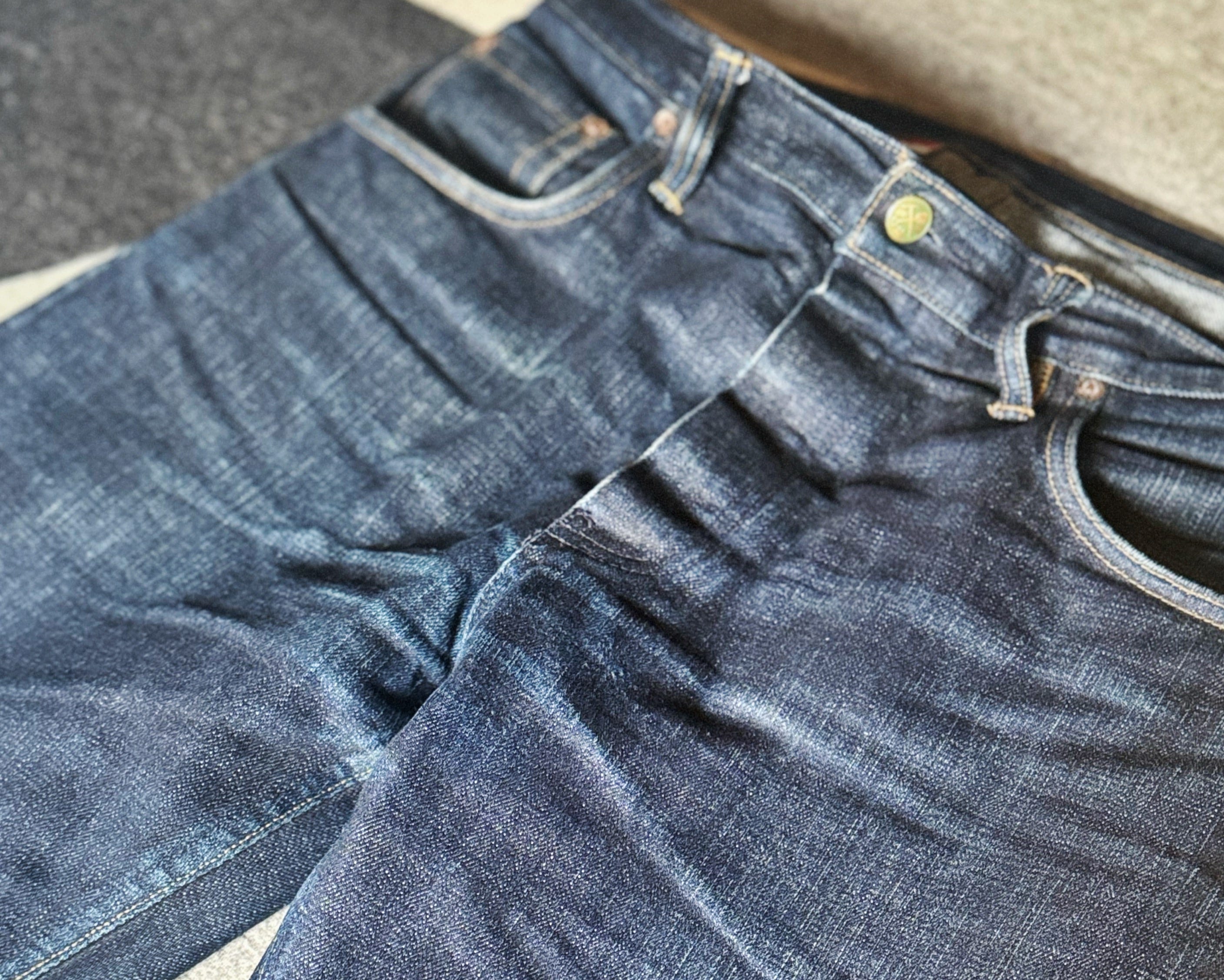
1. Fetish Denim / Standard Blue Jeans
There’s a surefire way to know whether you’re a real denim head: Imagine yourself in your favorite jeans, being crushed by a slow-rolling cement mixer. If you already know that your last thought, right before your brains squirt out top like a jelly donut, will be about all the sick fades the selvedge must be picking up, then you have the affliction.
I recently found my old pair of heavy-duty Left Field Atlas jeans, made in the USA from 18 oz. ring-spun Common Mill denim out of Kojima, Japan. I was digging through winter clothes in the mountain house and suddenly there they were, like a misplaced crack pipe staring up at Charlie Sheen from under the bed: Just pick me up, baby, they whispered. Let’s get weird again, let’s take this way too far.
Every guy should have a pair of jeans like that—the ones that scratch the deepest denim-nerd itches, from dyeing technique to mill history to construction and all the stupid, subtle, obsessive details—but you probably shouldn’t have two pairs. Two pairs leads to a pernicious and very annoying habit that’s sure to empty your bank account and cost you friends in the long run.
Since you only get the one, I’d argue your fetish jeans should also be the pair you’re likely to wear most often, since the slow, accretive degradation—the whiskering and fading, rips, sags, stains, and holes—is what springs the denim head harder than a rat trap, none of which can happen when they’re sitting on a shelf in your closet. For most guys, the pair that will get the most use is a standard blue jean. The Atlases I have are essentially a Levi’s 501 silhouette, which also happens to be the most versatile and universally flattering for men: mid-rise, roomy thigh, slight taper. No matter what trends are happening in men’s fashion (or women’s, for that matter), a 501 silhouette is never wrong.
Just remember, regardless of how much you spend—and at the high end it could be quite a bit indeed—if you go this route, wear them as denim first and a luxury item second. In other words, aside from a preppy combo of tweed or flannel, oxford cloth, shell cordovan and knit ties, don’t try to dress up standard-issue blue jeans, even if eye-wateringly expensive—no odd suit jackets, no peak lapels, no goddamn shiny black shoes (see below).
2. Black-Black Jeans
Typical denim is made with both blue and white yarns—the visible blue warp runs vertically, the white weft shuttles everything together horizontally. You can get black denim made this way, with a black warp instead of blue, but what you want here is for both the warp and weft yarns to be black, because you want a pair that makes you feel like Anthony Bourdain back when he was alive and still on the horse. Jeans you’d wear to a bar fight.
That doesn’t mean they have to be skinny, by the way, just straight and very black. They should open up a whole new dimension in terms of what can be worn with them that (mostly) shouldn’t be worn with 501-style blue jeans: Chelsea boots, black leather, more structured tailoring.
(And yes, I recognize there’s a current #menswear love for shiny black leather shoes with light wash denim, but it triggers the same question for me that women had during the bald pubic-wax craze of the early Aughts—namely, why does everyone suddenly want to look like a sexless 14-year-old? Because that’s the look, even on Jacob Elordi; I couldn’t be more revulsed by the combination on a man if it included him wearing his balls on the outside of his zipper.)
The warning with black-black jeans is not to make them part of a costume; you don’t want to look like a background player in a local production of “Grease.” Keeping things head-to-toe dark is fine (recommended even) but vary textures and colors: Try black jeans with brown suede boots, a navy roll-neck, gray or olive chore coats and cardigans, that sort of thing.
3. “White” Jeans
Self-explanatory, except of course not. When people talk about white jeans, they’re often referring to ecru, or a sort of off-white or light brown-yellow hue, as opposed to proper blinding white.
So, which to choose? I have both but I only really wear the ecru (from Officine Générale). These wear more like five-pocket trousers and are therefore more versatile—a trim, straight-leg pair looks great dressed up with a merino polo, sport coat, and loafers, or dressed down with a tee, overshirt, and leather sneakers. They’ll never look quite as good as proper white jeans at the beach, but then again white-white jeans really can’t be dressed up—ever, don’t try—and I’ll always choose the more versatile pair. More bang for the buck.
As for the whole don’t-wear-white-in-winter nonsense, it’s bullshit, ignore it.
4. Wild Card: The “Other” Black Jeans
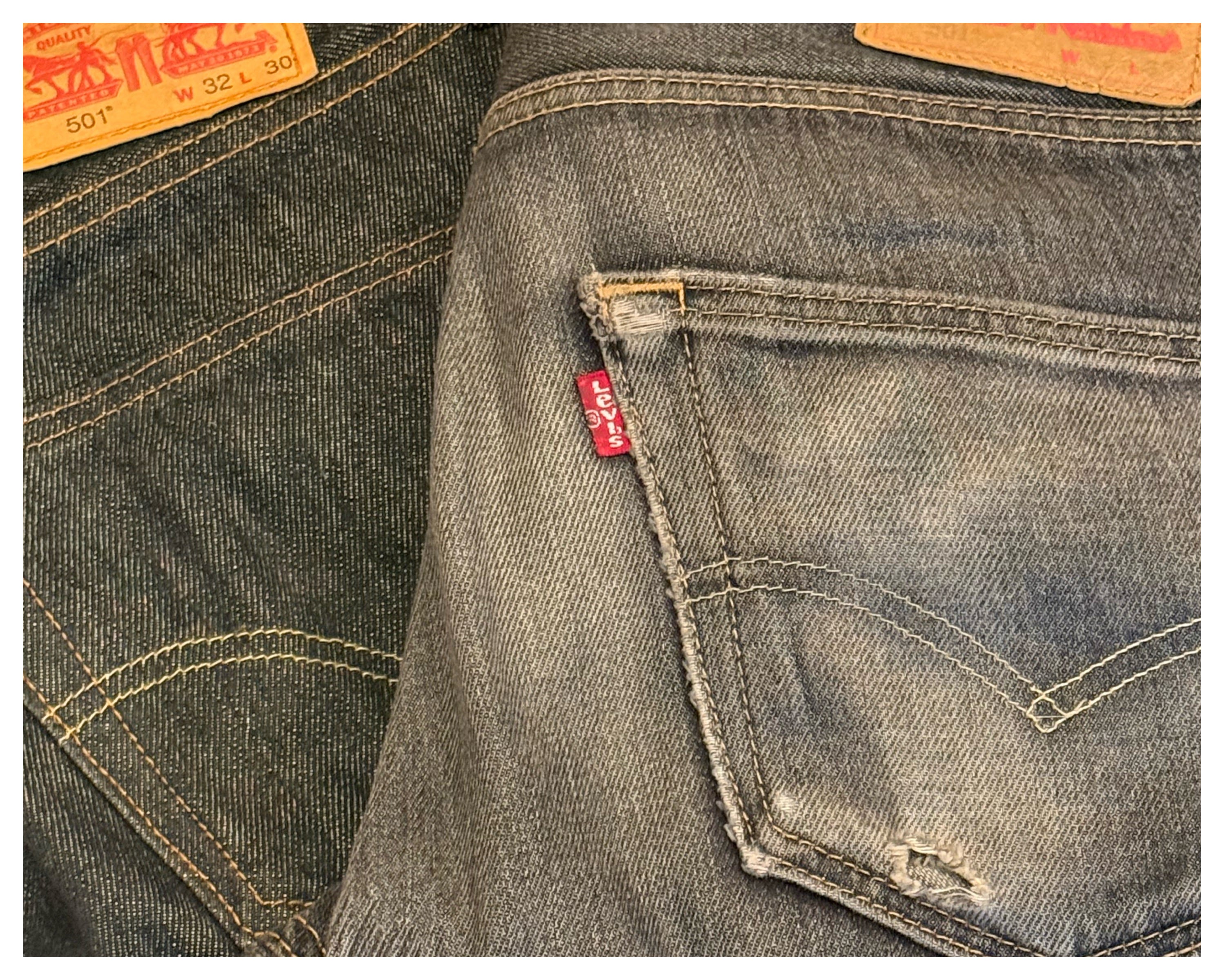
Shrink-to-Fit Levi’s 501s are inexpensive as far as jeans go (around fifty bucks) and, as previously mentioned, offer the most flattering silhouette across every body type. As far as I can ever endorse a “style hack,” a pair of black Shrink-to-Fit 501s (and here I mean “regular” black, with a white weft yarn, which actually appear more of a dark gray) is actually two pairs of jeans in one.
First, before you induce the shrinkage by soaking or washing them, wear as you would regular 501s but slightly oversized and optimized for darker, more monochrome color palettes where blue doesn’t work as well—think white OCBD, gray tie, gray cardigan, gray herringbone tweed sport coat.
Being cheap, these will wear quickly. As soon as the denim loses the crisp, stiff look and starts to fade—which might only take six to eight months of irregular wear—I wash and shrink and then have them tailored with a 1.5-inch taper from the knee to the ankle. The fade accelerates quickly after that first wash, and you soon find yourself with a pair of slimmer gray jeans that go with, basically, everything.
The downside is they don’t last—a couple to a few years, max. You’ll need to get the crotch repaired several times over that lifespan, but otherwise I just let them go to hell gracefully, like Keith Richards (also a fan of gray jeans). As soon as the first holes appear I buy a new pair of Shrink-to-Fit 501s and start the whole process over again. It’s a sop to consumerism, yes, but hardly fast fashion.
SOURCING
Europe, for all its justified snobbery about wine, art, cheese, and architecture, largely makes awful jeans. Europeans fuck up denim the way Americans fuck up sandwiches: too much all at once, no sense of proportion or restraint. They can’t help but try to fancy up the formula with ornate seams, aggressive washes, or, god help me, flapped and buttoned rear pockets. Avoid like a drunk Giants fan1.
There’s no rabbit hole like a Japanese rabbit hole and obviously, since the country now produces all (or nearly all) of the world’s premium denim (RIP Cone Mills) because the country accounts for nearly every vintage shuttle loom on which it’s produced, there are countless amazing labels out of Japan. That said, America invented the goddamn category and the number of homegrown brands still making exceptional made-in-the-USA jeans deserve your support. Try the aforementioned Left Field, plus Raleigh Denim Workshop, Observer Collection (whose denim line is about to go deadstock—act fast), and Shockoe Atelier.
THE ONLY HARD AND FAST RULE
Wash denim in a washing machine, dry them in a dryer (though I prefer to hang dry so they shrink less and last longer), hang them, fold them, whatever—just don’t ever, ever, ever, ever, ever, ever, ever, ever buy any jeans with any amount of stretch in them whatsoever, no matter how expensive they are or how fat you happen to be. They wear like shit and age like bread.
-J
The exceptions being ecru jeans, which they tend to do better than Americans, and bespoke tailoring-focused approaches to denim, as with Blackhorse Lane out of the UK.
Love denim, love this! Have a pair of Oni's with a matching jacket I need to break out, come to think of it.